Sloping, sagging or bouncy floors
People use the three words as if they meant the same thing. Underneath the floor they are three separate problems, and knowing which one you have makes the phone call shorter.
Three complaints
Slope, sag and bounce
Slope
The whole room tilts one way, usually toward an outside wall. A ball set down rolls to the same side every time. This often goes with the outer foundation settling along that wall.
Sag
The floor dips along a line or in a bowl near the middle of the house and rises again toward the walls. This often goes with a beam or a row of piers under the floor losing height.
Bounce
The floor is level enough but springs when you cross it, and the china cabinet rattles. This is more often joists that span too far, were notched, or have softened with damp.
Describe it well
Simple tests that give an inspector a head start
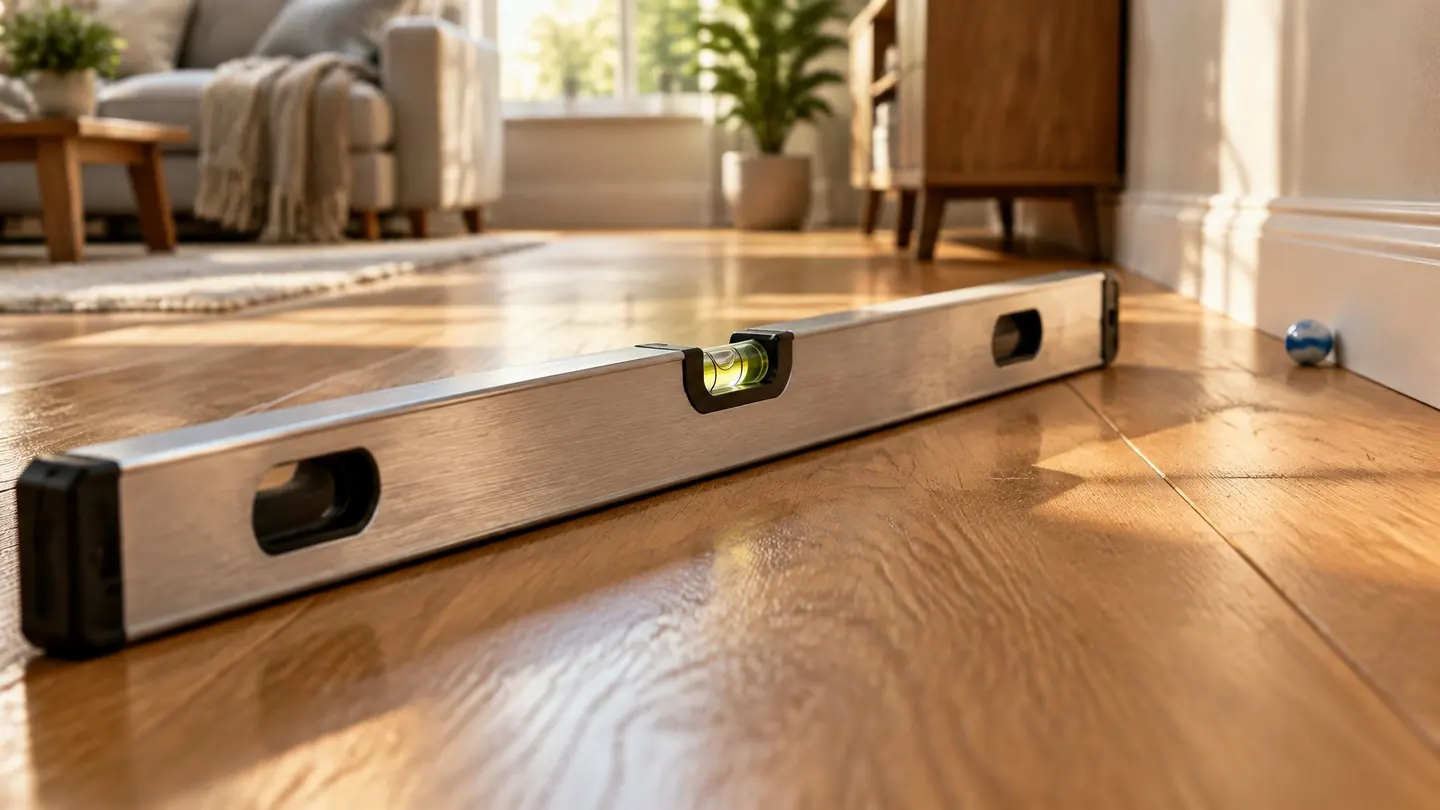
Set a marble or a golf ball down in several spots and note which way it goes. Lay a level, or a phone with a level app, on the floor at each wall. Look along the baseboards for a gap that opens toward one corner, and along tile for grout lines that have cracked in a straight run.
Then work out what the house stands on, because the repair depends on it. Small screened vents low in the outside walls and a hatch or short door somewhere mean a crawl space. Stairs going down mean a basement. A floor that is tile or carpet straight over concrete, with the garage at the same height, usually means a slab.
Under a Murfreesboro floor
Damp crawl spaces and clay under the piers
Crawl spaces are common in Middle Tennessee houses of every age. The area gets a little over fifty inches of rain in an ordinary year and its summers are humid, so the air under a house is often damp for months. Wood that stays damp slowly loses stiffness.
The short piers that hold up the main beam usually stand on small footings in clay. Where that clay softens or shrinks, a pier drops a little and takes the floor above it down. On a slab, the concrete itself can crack and tilt where the fill under it has settled; the foundation crack page deals with slabs.
The visit
What gets measured
A floor height map
Readings taken room by room with a levelling instrument, drawn onto a plan of the house so the low areas are plain.
The framing below
In a crawl space: the spacing and condition of piers, the main beam, the joists, and the moisture content of the wood.
The outside foundation
Whether the perimeter wall or slab edge has dropped where the floor slopes, and what the drainage is like there.
Possible repairs
What a proposal may include
For a sag: adjustable steel posts on new concrete pads, extra piers, or a replacement section of beam. For bounce: doubling up joists or adding a mid-span support. For slope: piers under the settled outside wall, or lifting a slab with injected foam or grout.
Floors are raised slowly, and raising them can crack drywall or tile that set in the lower position. A floor may not come back to dead level. Ask the company to write down how much lift it expects and what it will do about finishes that are disturbed.
Questions
About uneven floors
Isn't some slope normal in an older house?
Older houses often have floors that are a little out of level and have been that way for decades. What matters more is change: a slope that is new, growing, or joined by cracks and sticking doors. Whether yours is one or the other needs measuring.
Will my floors be perfectly level afterwards?
No honest company promises that. The aim is usually to stop further movement and recover as much height as the house will give up without damage.
The floor is only bouncy in one room. Who do I call?
A foundation company that works in crawl spaces deals with joists and supports as well as footings, so it is a reasonable first call. If the floor is over a finished basement ceiling, a structural engineer may be the quicker route to an answer.
One phone call
Speak with a foundation repair company near Murfreesboro
Mention the crack, the dip or the lean, name the room, and give the month you first spotted it. Whoever picks up belongs to a Middle Tennessee foundation outfit whose only tie to this website is the referral. They can pencil in an inspection and follow it with a written price.
A house that is cracking as you listen, a wall on the point of failing, gas in the air: everybody outside first, then 911 and the gas company.
Expect the call to be recorded. Two short pages cover the rest: who pays for referrals and what becomes of call details.