Looking after a foundation in Middle Tennessee
You cannot change the rock or the clay under a house. You can control most of the water that reaches them, and around here water is what sets the ground moving.
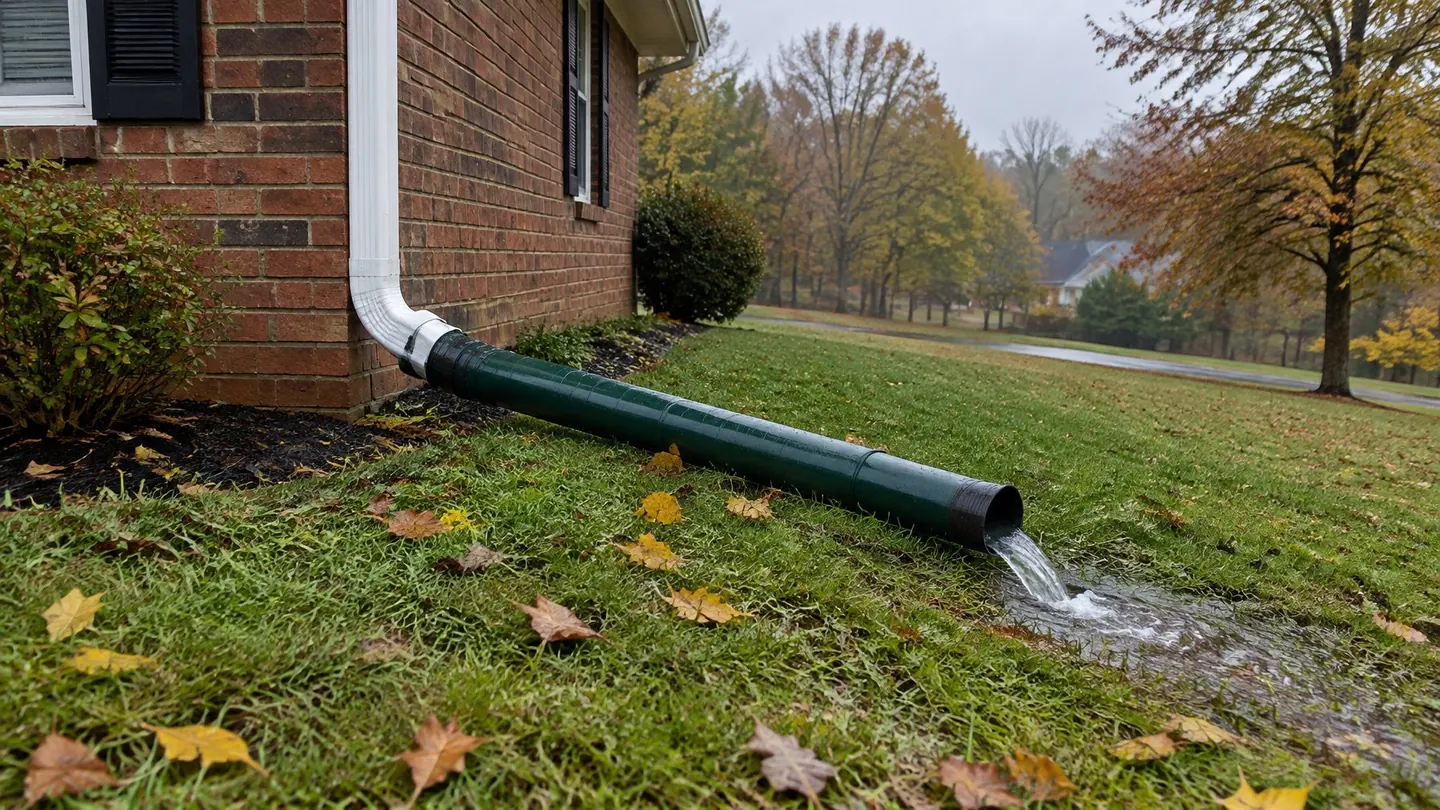
Water first
Five jobs that keep the soil steady
Clean the gutters
Twice a year, and after the leaves drop. An overflowing gutter pours a roof's worth of rain onto one strip of soil beside the footing.
Carry downspout water away
Fit extensions or buried pipe so that each downspout empties several feet from the wall, onto ground that falls away from the house.
Check the slope
Soil, mulch and paving should fall away from the foundation on every side. Beds built up against the wall over the years, and paving that has tipped back toward the house, are the usual culprits.
Mind where the water ends up
Do not send roof or sump water into a dip or sinkhole. The federal study of Murfreesboro sinkholes found that extra inflow made their flooding higher or longer.
Fix leaks promptly
A dripping hose bib, a split irrigation line or a sweating air conditioner drain can keep one corner wet all summer.
Trees and dry spells
When the clay dries out
Trees
A large tree drinks heavily in a dry late summer and can dry the clay under the nearest part of the foundation more than under the others. Think about mature size before planting close to a house. Do not cut major roots beside a foundation without advice; the tree and the soil both react.
Cracks in the ground
A gap opening between the soil and the foundation wall in September is the clay shrinking. It normally closes when the rain returns. Note where it happens. If the same stretch of wall is also where the brick has cracked, mention both when you call.
Crawl space
A ten-minute look, spring and autumn
- Shine a light in from the hatch. Standing water or dark, wet soil is worth acting on.
- Look for the plastic ground cover and whether it still covers the soil.
- Check that vents are not blocked by mulch, leaves or stored things.
- Smell matters: a strong musty smell means sustained damp.
- Look along the main beam for piers that lean or have gaps at the top.
You do not need to crawl in. What you can see from the opening is enough to decide whether to ask someone who will.
Keep watch
How to monitor a crack yourself
Pick two dates a year, one in the wet of early spring and one in the dry of early autumn. On each, photograph every crack you know about with a ruler held across it, and keep the pictures in one folder. Make a small pencil mark at the tip of each crack and date it.
After two or three rounds you will know whether a crack is seasonal, stable or growing. That record is worth more to an inspector than any description.
Other trades
When the right call is someone else
Water coming into a basement or crawl space with no cracking or movement is work for a waterproofing specialist. A wet patch that does not follow the weather is often a pipe, and a plumber can test for that. A roof or gutter that leaks is a roofer's job. A foundation repair company is the right call when something has cracked, tilted, dropped or bowed.
One phone call
Speak with a foundation repair company near Murfreesboro
Mention the crack, the dip or the lean, name the room, and give the month you first spotted it. Whoever picks up belongs to a Middle Tennessee foundation outfit whose only tie to this website is the referral. They can pencil in an inspection and follow it with a written price.
A house that is cracking as you listen, a wall on the point of failing, gas in the air: everybody outside first, then 911 and the gas company.
Expect the call to be recorded. Two short pages cover the rest: who pays for referrals and what becomes of call details.